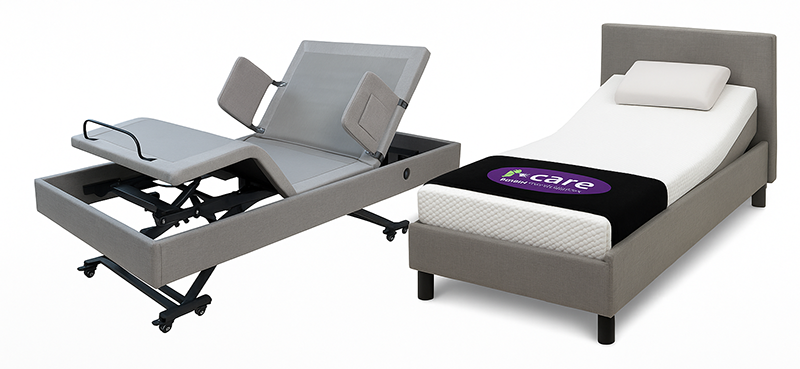
Staff Knowledge Check
Test your understanding with real-life scenario questions. Great for team discussion or self-check.
Q1. Why are electric adjustable beds often used in home care or aged care settings?
- A) For entertainment purposes
- B) To assist with positioning, comfort, and carer support
- C) To make bedrooms look more modern
- D) Because they are smaller than standard beds
🎉 Correct! Adjustable beds support client comfort, safe transfers, medical positioning, and ease of care from support workers or family.
❌ Incorrect. They serve clinical and care purposes, not just recreation.
❌ Incorrect. Visual design is secondary to functionality.
❌ Incorrect. Bed size varies but is not the main reason.
Q2. What is the benefit of a "low-low" height feature in some adjustable beds?
- A) It helps the user exercise more
- B) It allows the bed to be used as a couch
- C) It reduces the risk of falls when getting in or out of bed
- D) It improves heating efficiency
🎉 Correct! Ultra-low beds help reduce fall risk and are particularly helpful for clients with balance, mobility, or dementia-related concerns.
❌ Incorrect. This feature isn't related to exercise.
❌ Incorrect. While comfortable, the couch use isn't the purpose.
❌ Incorrect. Bed height doesn't impact room heating.
Q3. What does the term “hi-lo” bed typically refer to?
- A) A bed that plays music
- B) A bed that can raise or lower in height electrically
- C) A bed that has no footboard
- D) A bed made for bunk rooms
🎉 Correct! “Hi-lo” refers to electric height adjustment of the whole bed frame, allowing better transfer and care support.
❌ Incorrect. Beds don’t typically include sound features.
❌ Incorrect. Footboards may vary but are unrelated to "hi-lo."
❌ Incorrect. Hi-lo beds are not for bunk usage.
Q4. What is the role of a handset or remote on an adjustable bed?
- A) To call the nurse
- B) To control head and foot positioning, and sometimes height
- C) To control lighting in the room
- D) To lock the wheels of the bed
🎉 Correct! The handset allows users or carers to raise/lower the head, foot, and full bed height for comfort or care access.
❌ Incorrect. It doesn’t connect to a nurse call system unless integrated separately.
❌ Incorrect. Room lighting is not controlled by bed handsets.
❌ Incorrect. Wheel locks are manual on most beds.
Q5. Why is the “safe working load” important when selecting a bed?
- A) It determines how fast the bed can be delivered
- B) It indicates the maximum combined weight the bed can safely support
- C) It sets the size of the mattress
- D) It helps decide what colour the bed is
🎉 Correct! The safe working load includes the user's weight plus mattress and bedding, ensuring safe operation of motor and frame.
❌ Incorrect. It does not affect delivery speed.
❌ Incorrect. Mattress size is a separate specification.
❌ Incorrect. Colour and load capacity are unrelated.
Q6. What bed feature can assist with nighttime safety and visibility for users or carers?
- A) Headboard decoration
- B) Under-bed lighting
- C) Louder motors
- D) Adjustable legs
🎉 Correct! Under-bed lighting provides subtle illumination to reduce trip hazards and assist during night transfers or care.
❌ Incorrect. Headboards don’t aid with safety visibility.
❌ Incorrect. Quiet motors are usually preferred.
❌ Incorrect. Adjustable legs are not lighting features.
Q7. Why might a dual-bed or partner-bed system be chosen in home care settings?
- A) For decoration purposes
- B) To allow both partners to sleep together while only one needs adjustability
- C) To increase bed weight
- D) Because single beds are not available
🎉 Correct! Partner beds allow couples to remain together with one side adjustable for clinical needs and the other side fixed or minimally adjustable.
❌ Incorrect. Clinical or comfort reasons guide this decision.
❌ Incorrect. Added weight isn’t a clinical goal.
❌ Incorrect. Singles are widely available.
Q8. Which clients benefit most from an adjustable head/back rest in a bed?
- A) Those who enjoy watching TV
- B) Clients with respiratory issues, reflux, or who need assistance sitting up
- C) Young children only
- D) Clients who don’t use pillows
🎉 Correct! Elevating the backrest can assist with breathing, digestion, and safe transfers in and out of bed.
❌ Incorrect. This may be a comfort use, but not the clinical reason.
❌ Incorrect. Adjustable beds are not just for children.
❌ Incorrect. Pillow preference doesn’t determine bed use.
Q9. What does a “battery backup” feature do in an electric bed?
- A) Makes the bed charge your phone
- B) Powers the bed during a power outage for emergency repositioning
- C) Helps the mattress inflate
- D) Keeps the bed warm
🎉 Correct! Battery backup allows key bed movements during blackouts to keep clients safe and supported.
❌ Incorrect. Charging phones is unrelated to battery backups.
❌ Incorrect. Mattress inflation is not linked to the bed battery.
❌ Incorrect. Bed warmth is not part of this feature.
Q10. When might bed rails or side handrails be recommended?
- A) To prevent falls or support during repositioning
- B) To hang clothes from
- C) To replace a headboard
- D) Only in hospital settings
🎉 Correct! Rails provide support for transfers, repositioning, or fall prevention in home and care settings.
❌ Incorrect. That’s not a safe use for handrails.
❌ Incorrect. Handrails are separate to headboards.
❌ Incorrect. Rails are also widely used at home.
Q11. What is the purpose of a “lockout” feature on a hospital-style bed remote?
- A) To stop the bed from being stolen
- B) To prevent accidental or unsafe use of functions
- C) To play music from the bed
- D) To disable the lights in the room
🎉 Correct! Lockout functions let carers disable certain adjustments to prevent injury or confusion, especially in clients with cognitive impairments.
❌ Incorrect. Beds aren’t locked for theft prevention in this way.
❌ Incorrect. Lockout doesn’t control music features.
❌ Incorrect. Room lights are unrelated to bed remotes.
Q12. Why might a client require a bariatric bed?
- A) They need a longer mattress
- B) They require a bed with a higher safe working load and wider sleeping surface
- C) They want more colours to choose from
- D) They want more noise from the motor
🎉 Correct! Bariatric beds are designed for larger individuals and provide safety, comfort, and ease of care for both clients and support workers.
❌ Incorrect. Length may vary, but width and load capacity are key.
❌ Incorrect. Aesthetic options are not the clinical reason.
❌ Incorrect. Quiet operation is preferred, not extra noise.
Q13. What is a key benefit of trendelenburg and reverse-trendelenburg positioning in a bed?
- A) Allows fashionable bed angles
- B) Supports clinical needs like circulation, respiratory therapy, or comfort in specific conditions
- C) Helps make the bed easier to iron
- D) Makes the bed compatible with bunk setups
🎉 Correct! These positions support certain medical conditions, including postural drainage, breathing, and circulation support.
❌ Incorrect. These angles have clinical uses, not aesthetic value.
❌ Incorrect. Ironing is unrelated.
❌ Incorrect. These beds are not meant for stacking or bunking.
Q14. When would a client likely benefit from a bed with adjustable knee lift (leg raise)?
- A) If they want to sleep upright all the time
- B) If they have swelling in their lower limbs or need postural support
- C) If they enjoy stretching their calves
- D) Only if they are very tall
🎉 Correct! Elevating the legs can support circulation and comfort, and is helpful for edema, pressure relief, and joint support.
❌ Incorrect. Knee lift isn’t for upright sleeping only.
❌ Incorrect. That’s not a clinical reason.
❌ Incorrect. Height is not the main factor.
Q15. What type of mattress is commonly paired with adjustable care beds?
- A) Standard innerspring mattress
- B) Foam or pressure-relieving mattress with flexibility for movement
- C) Waterbed
- D) Cot mattress
🎉 Correct! These mattresses are designed to flex with moving bed sections and support pressure care and posture.
❌ Incorrect. Innerspring mattresses may not flex safely.
❌ Incorrect. Waterbeds are not clinically appropriate here.
❌ Incorrect. Cot mattresses are for infants, not adult care beds.
Q16. What should be checked before assembling an electric care bed in a client’s home?
- A) Whether the TV remote works
- B) That there is enough space, a flat surface, and access to a power outlet
- C) That the curtains match the bed
- D) If the client owns a vacuum cleaner
🎉 Correct! Beds should be installed safely with proper access to power, level flooring, and sufficient clearance for function and transfers.
❌ Incorrect. TV remotes are unrelated to bed setup.
❌ Incorrect. Aesthetic matching isn’t required for safety.
❌ Incorrect. Cleaning tools are not part of bed assembly checks.
Q17. Why are locking castors important on an electric bed?
- A) To let the bed move faster
- B) To prevent the bed from moving during transfers or care
- C) To help the bed float
- D) To turn off the power
🎉 Correct! Lockable wheels improve safety during repositioning and transfers, reducing fall or injury risk.
❌ Incorrect. Locking is for stability, not speed.
❌ Incorrect. Beds are not designed to float.
❌ Incorrect. Locks are mechanical, not electrical controls.
Q18. Which of the following is a key safety concern when using bed rails?
- A) They may cause the client to sleep longer
- B) They can create entrapment risks if not fitted properly
- C) They make the bed lighter
- D) They block Wi-Fi signals
🎉 Correct! Bed rails can be helpful for support but must be correctly installed and clinically appropriate to prevent entrapment or injury.
❌ Incorrect. Sleep length isn’t affected by rails.
❌ Incorrect. Rails add weight, not remove it.
❌ Incorrect. Rails don’t interfere with Wi-Fi.
Q19. What is a “split mattress platform” and why is it useful?
- A) A platform that plays music under the mattress
- B) A segmented surface that allows different parts of the bed to move independently
- C) A mattress that separates into two beds
- D) A bed that only lifts the head area
🎉 Correct! These beds can raise the head, knees, or legs independently, offering tailored positioning for comfort or medical need.
❌ Incorrect. No music features are involved.
❌ Incorrect. Split platforms don’t divide the bed.
❌ Incorrect. These allow multiple sections to move, not just the head.
Q20. What is the benefit of a “home care appearance” bed frame?
- A) It reduces the weight of the bed
- B) It helps the client feel more comfortable and less medicalised at home
- C) It helps hide wires
- D) It improves remote control distance
🎉 Correct! A less clinical look can improve psychological comfort and dignity for users receiving care in their own home.
❌ Incorrect. Appearance doesn’t always reduce weight.
❌ Incorrect. Wire concealment is a separate design factor.
❌ Incorrect. Frame aesthetics don’t affect signal range.
Q21. What is one risk if a client is placed in a bed that is too high off the ground?
- A) The bed will wear out faster
- B) The client may fall when transferring in or out
- C) The mattress will become harder
- D) The bed will move too quickly
🎉 Correct! Improper bed height can make transfers unsafe, especially for clients with poor mobility or balance.
❌ Incorrect. Bed height doesn't affect lifespan directly.
❌ Incorrect. Mattress firmness is not tied to bed height.
❌ Incorrect. Bed movement speed is motor-controlled, not height-based.
Q22. What is a major advantage of profiling beds compared to flat, fixed beds?
- A) They look better on camera
- B) They allow adjustable head, leg, and overall height sections for better care
- C) They are always cheaper
- D) They prevent users from moving too much
🎉 Correct! Profiling beds provide adjustable segments to improve comfort, support pressure care, and assist with carer access.
❌ Incorrect. Appearance isn’t the clinical advantage.
❌ Incorrect. They are often more expensive due to functionality.
❌ Incorrect. Movement support is not the same as restriction.
Q23. Which feature helps a bed be more easily moved around the home or facility?
- A) Swivel arms
- B) Large castors with directional locking
- C) Extra pillows
- D) Louder motor functions
🎉 Correct! Castors with directional locking help beds roll more easily and safely during repositioning or cleaning.
❌ Incorrect. Arms are not typically part of bed design.
❌ Incorrect. Pillows don’t affect bed movement.
❌ Incorrect. Motor noise isn’t helpful or related.
Q24. When delivering a bed to a client with dementia, what additional factor may be considered?
- A) The colour of the wheels
- B) The position of the bed near familiar surroundings
- C) The size of the truck used
- D) Whether the client prefers online shopping
🎉 Correct! Familiar objects, routine, and positioning can help reduce disorientation and anxiety for clients with cognitive impairments.
❌ Incorrect. Wheel colour has no impact on dementia care.
❌ Incorrect. Truck size is irrelevant to in-home care.
❌ Incorrect. This is unrelated to bed delivery or safety.
Q25. What is one reason a therapist might recommend a bed with a back-up manual crank?
- A) To help during power outages
- B) To practice hand strengthening
- C) To reduce the need for a mattress
- D) To improve the sound of the bed
🎉 Correct! Manual cranks provide emergency adjustment if electric controls are unavailable due to power failure or remote issues.
❌ Incorrect. Hand strength therapy isn’t the purpose.
❌ Incorrect. The bed still requires a mattress.
❌ Incorrect. Bed acoustics aren’t a factor here.
Q26. Which of the following client groups is most likely to benefit from a height-adjustable bed?
- A) Clients with good mobility and no support needs
- B) Clients with limited mobility or those who require carer assistance
- C) Children who like to jump on beds
- D) Clients who prefer hard mattresses
🎉 Correct! Adjustable height beds help clients transfer more easily and reduce carer strain during daily care tasks.
❌ Incorrect. These clients may not need an adjustable bed.
❌ Incorrect. Jumping is unsafe and not encouraged.
❌ Incorrect. Mattress firmness isn't the key factor here.
Q27. What is a key reason for using a pressure care mattress with an adjustable bed?
- A) It’s cheaper than other options
- B) It helps prevent pressure injuries and improves comfort during long periods in bed
- C) It helps the bed change colour
- D) It makes the bed easier to clean
🎉 Correct! Pressure care mattresses help distribute weight evenly and reduce the risk of skin breakdown for immobile clients.
❌ Incorrect. Clinical benefit is the main consideration, not price.
❌ Incorrect. Mattress colour is not a clinical factor.
❌ Incorrect. Cleanability is important, but not the main reason here.
Q28. What does "adjustable backrest elevation" mean in the context of electric beds?
- A) The headboard is removable
- B) The upper body section of the bed can be raised for comfort or support
- C) The entire bed tips backward
- D) The mattress inflates with air
🎉 Correct! Backrest elevation helps users sit up in bed, eat, read, breathe easier, or receive care more comfortably.
❌ Incorrect. Headboard removal is unrelated.
❌ Incorrect. That describes a tilt function, not backrest elevation.
❌ Incorrect. Adjustable beds don’t inflate by default.
Q29. Which statement is TRUE about assembling beds with split bases or foldable frames?
- A) They are only used in hospitals
- B) They make delivery and setup easier in tight spaces
- C) They cannot support adjustable features
- D) They are more decorative than functional
🎉 Correct! Beds with split bases are practical for transport and setup in homes with limited access or narrow hallways.
❌ Incorrect. These are often used in home settings.
❌ Incorrect. Many split-base beds are fully adjustable.
❌ Incorrect. The focus is functionality, not decoration.
Q30. Why is client assessment important before recommending a bed model?
- A) So we can guess what they’ll like
- B) Because all clients are the same
- C) To match the features of the bed with the client’s specific clinical and comfort needs
- D) To speed up delivery time
🎉 Correct! Proper assessment ensures that the bed’s size, height, features, and accessories are safe and suitable for the user’s individual situation.
❌ Incorrect. Assessment is a structured process, not guessing.
❌ Incorrect. Clients have very different needs.
❌ Incorrect. While timely delivery matters, safety and suitability come first.
Q31. What is the purpose of a low-height or floor-level bed?
- A) To make cleaning easier
- B) To reduce fall injury risk for clients at high risk of rolling out of bed
- C) To improve the look of the bedroom
- D) To help the bed float during floods
🎉 Correct! Floor-level beds reduce injury risk by minimising the height a person would fall, and may be combined with floor mats for added safety.
❌ Incorrect. Cleaning is not the primary purpose.
❌ Incorrect. Safety, not aesthetics, drives this choice.
❌ Incorrect. These beds are not flotation devices.
Q32. What safety feature should be considered for clients who are at risk of becoming trapped between the bed and rail?
- A) Coloured bed linen
- B) Soft rail covers or entrapment gap fillers
- C) Adding a second mattress
- D) Keeping the remote away from the client
🎉 Correct! Rail covers and gap fillers reduce the risk of entrapment injuries by padding or closing dangerous gaps.
❌ Incorrect. Linen colour doesn’t address entrapment risks.
❌ Incorrect. Extra mattresses can increase risk, not reduce it.
❌ Incorrect. Remote access should be based on client ability, not avoidance.
Q33. Which part of an electric bed helps carers reduce bending and manual handling strain?
- A) The wooden slats
- B) The height-adjustable frame
- C) The colour of the side rails
- D) The size of the mattress
🎉 Correct! Raising the bed to waist height allows carers to provide support without excessive bending, reducing injury risk.
❌ Incorrect. Slats support the mattress, not the carer.
❌ Incorrect. Rail colour is not functionally relevant to carer safety.
❌ Incorrect. Mattress size may affect comfort but not carer posture directly.
Q34. Why is compatibility between bed and mattress important?
- A) So the colours match
- B) So the mattress will bend safely with the profiling features of the bed
- C) So the mattress fits in a car
- D) So the bed can be used outdoors
🎉 Correct! Some mattresses are not suitable for electric profiling and may bunch or break if forced to bend incorrectly.
❌ Incorrect. Clinical function outweighs colour preferences.
❌ Incorrect. Transport size is not the key concern.
❌ Incorrect. These beds are not designed for outdoor use.
Q35. Which client need might require a bed that can tilt forward slightly?
- A) To discourage use of pillows
- B) To assist with getting in and out of bed (transfer support)
- C) To help the sheets stay tucked in
- D) To keep pets off the bed
🎉 Correct! Forward tilt functions can gently assist clients into a semi-standing position, supporting independence or carer-assisted transfers.
❌ Incorrect. Tilt is not intended to discourage pillow use.
❌ Incorrect. Sheet tucking is unrelated to tilt angle.
❌ Incorrect. Pet deterrence is not a function of bed tilt.
Q36. What is a “Trendelenburg” position in electric beds used for?
- A) To elevate the head above the feet
- B) To create a rocking motion
- C) To position the feet higher than the head for medical purposes
- D) To store the bed under a desk
🎉 Correct! Trendelenburg positioning involves tilting the bed so the feet are above the head, often used in certain clinical situations like circulation support.
❌ Incorrect. That’s the reverse Trendelenburg.
❌ Incorrect. The bed doesn’t rock.
❌ Incorrect. This is not a space-saving feature.
Q37. Why might a mattress with side bolsters be recommended?
- A) To make the bed look wider
- B) To reduce the risk of the client rolling out of bed
- C) To hold extra pillows
- D) To attach side tables
🎉 Correct! Side bolsters are raised edges that provide passive support and help prevent unintentional bed exits or falls.
❌ Incorrect. The function is safety, not aesthetics.
❌ Incorrect. Pillows can be used regardless of bolsters.
❌ Incorrect. Side tables are separate items.
Q38. What is an important reason to check for bed exit alarms or sensor compatibility?
- A) To reduce mattress cost
- B) To alert carers if a high-risk client attempts to get up without assistance
- C) To automatically adjust bed temperature
- D) To control the television volume
🎉 Correct! Bed exit alarms help ensure safety for clients who are at risk of falls or disorientation, particularly in care settings.
❌ Incorrect. Sensors are not for cost reduction.
❌ Incorrect. Temperature control is not a sensor function.
❌ Incorrect. Bed alarms do not manage audio equipment.
Q39. What is the primary benefit of a partner bed with independently adjustable sides?
- A) One side can be used for storage
- B) Both users can customise their sleep position without disturbing each other
- C) It’s easier to lift the whole bed
- D) It reduces the need for pillows
🎉 Correct! Partner beds allow one user to elevate or lower their side independently, which is ideal when one partner has clinical needs and the other does not.
❌ Incorrect. Storage is not the main design purpose.
❌ Incorrect. Lifting is unrelated to partner bed design.
❌ Incorrect. Pillows may still be required for comfort.
Q40. What does “auto-regression” mean in the context of electric beds?
- A) The bed goes back in time
- B) The mattress hardens automatically
- C) The backrest slides back slightly when elevating to reduce pressure on the stomach and hips
- D) The bed automatically lowers every hour
🎉 Correct! Auto-regression reduces pressure buildup during backrest elevation by repositioning the user’s body to minimise shear.
❌ Incorrect. Beds don't have time travel functions.
❌ Incorrect. Mattress firmness is not part of auto-regression.
❌ Incorrect. That is not a real function.
Q41. Why is it important to check weight capacity when recommending a bed?
- A) So it fits better in the room
- B) To ensure the bed can support the client safely without risk of mechanical failure
- C) To match the bed linen
- D) To make the mattress softer
🎉 Correct! Beds have specific safe working load limits, and exceeding these may compromise safety and void the warranty.
❌ Incorrect. Room fit is important but not the reason to check capacity.
❌ Incorrect. Linen matching is unrelated to structural limits.
❌ Incorrect. Weight capacity doesn’t change mattress softness.
Q42. What does the “safe working load” (SWL) of a bed include?
- A) Only the client’s weight
- B) The weight of the client, mattress, and any accessories
- C) Just the mattress and sheets
- D) The weight of the delivery team
🎉 Correct! SWL includes everything the bed must support: client, mattress, side rails, and any other attached items.
❌ Incorrect. The SWL accounts for more than the client.
❌ Incorrect. That’s only part of the total load.
❌ Incorrect. Delivery staff are not included in SWL.
Q43. What is a key benefit of having a remote with clear symbols for bed controls?
- A) It helps carers avoid using the wrong appliance
- B) It reduces confusion for clients and carers, especially for those with cognitive or visual challenges
- C) It improves TV reception
- D) It makes the bed cheaper
🎉 Correct! Clear symbols and intuitive layouts help users understand and use the bed safely and independently.
❌ Incorrect. Appliance confusion isn’t the main concern.
❌ Incorrect. The bed remote doesn’t affect TV reception.
❌ Incorrect. A clearer remote may improve function but not necessarily reduce cost.
Q44. What feature of electric beds may improve respiratory function in some clients?
- A) Head elevation or backrest adjustment
- B) Wooden frame construction
- C) Battery backup
- D) Extra bedding
🎉 Correct! Elevating the upper body can make breathing easier for clients with respiratory issues or sleep apnoea.
❌ Incorrect. Frame material does not impact breathing.
❌ Incorrect. Backup power is important, but not for breathing support directly.
❌ Incorrect. Extra bedding could obstruct airflow.
Q45. In which situation might a split queen or king bed be most appropriate?
- A) When both partners need different bed heights and positioning
- B) When the client wants to sleep alone
- C) To reduce furniture in the room
- D) When standard beds are too long
🎉 Correct! Split beds allow each side to be adjusted independently—ideal when one partner has support needs and the other does not.
❌ Incorrect. A single bed may suit better in that case.
❌ Incorrect. Split beds may actually take more room.
❌ Incorrect. Length isn’t the main driver of a split bed recommendation.
Q46. What does “battery backup” in an electric bed allow for?
- A) It improves the lighting in the room
- B) It powers the bed temporarily during a power outage for safety or repositioning
- C) It keeps the bed warm
- D) It stores music
🎉 Correct! Battery backup allows the bed to be adjusted or returned to a safe position if power is lost.
❌ Incorrect. Bed batteries do not control lighting.
❌ Incorrect. Heating is not a function of the backup battery.
❌ Incorrect. Beds don’t have music storage functions.
Q47. What role do lockout features play on electric bed remotes?
- A) They make the bed more expensive
- B) They prevent clients from accidentally pressing unsafe functions
- C) They reduce electricity usage
- D) They dim the screen automatically
🎉 Correct! Lockout features allow carers to restrict access to specific controls to protect client safety.
❌ Incorrect. Safety features don’t necessarily impact price significantly.
❌ Incorrect. Lockouts are not designed to save energy.
❌ Incorrect. Lockouts are for function restriction, not display brightness.
Q48. What should be considered when recommending a bed for a bariatric client?
- A) Bed colour
- B) Enhanced weight capacity, wider frame, and reinforced structure
- C) Smaller mattress to reduce movement
- D) A basic single bed with added pillows
🎉 Correct! Bariatric beds are specially designed to safely accommodate higher weight and provide greater surface area for comfort and safety.
❌ Incorrect. Colour does not impact clinical suitability.
❌ Incorrect. A smaller mattress may reduce comfort and safety.
❌ Incorrect. Basic beds are often unsuitable for higher-weight users.
Q49. What is the benefit of removable or tool-free side rails?
- A) They make the bed less comfortable
- B) They allow carers to adjust or remove rails quickly based on client needs
- C) They reduce electricity usage
- D) They are more colourful
🎉 Correct! Quick-release rails are helpful in dynamic care environments where client needs change or transfers require open access.
❌ Incorrect. Comfort isn’t reduced by this feature.
❌ Incorrect. This feature has no effect on energy use.
❌ Incorrect. Colour is not the focus here.
Q50. Why might a caregiver request a handset with fewer buttons or simplified controls?
- A) To reduce costs
- B) To make the bed look more modern
- C) To make the bed easier to use for clients with cognitive or vision impairments
- D) To improve the sound system
🎉 Correct! Simpler controls can reduce user anxiety and help prevent confusion or misuse for clients with dementia or low vision.
❌ Incorrect. While cost matters, the key driver here is accessibility.
❌ Incorrect. Appearance is not the primary reason.
❌ Incorrect. Beds do not have audio systems as standard.